
History Of Negative Ions
A German physicist Philipp Eduard Anton Lenard scientifically proved that the air tends to be charged more negatively where water splashes such as a waterfall. This is why this phenomenon is called the Lenard effect.
Extensive research was conducted in Japan during the 1930s at universities, in particular at Hokkaido University, and in laboratories. A number of theories were established during this period. Research had only been conducted by a small number of researchers until the late 1990s when negative ions started attracting more attention.
As scientists uncovered more information about ions, the body of evidence showing their potential benefits grew quickly.
Today, the interest in negative ions continues to grow as more people around the world begin to purchase products like negative ion diffusers and air purifiers.

Healthy Levels Of Negative Ions
Ever been up in the mountains, at the beach, or in a thunderstorm and suddenly felt a huge change in your mood? That’s not just a feeling of awe. It might be negative ions
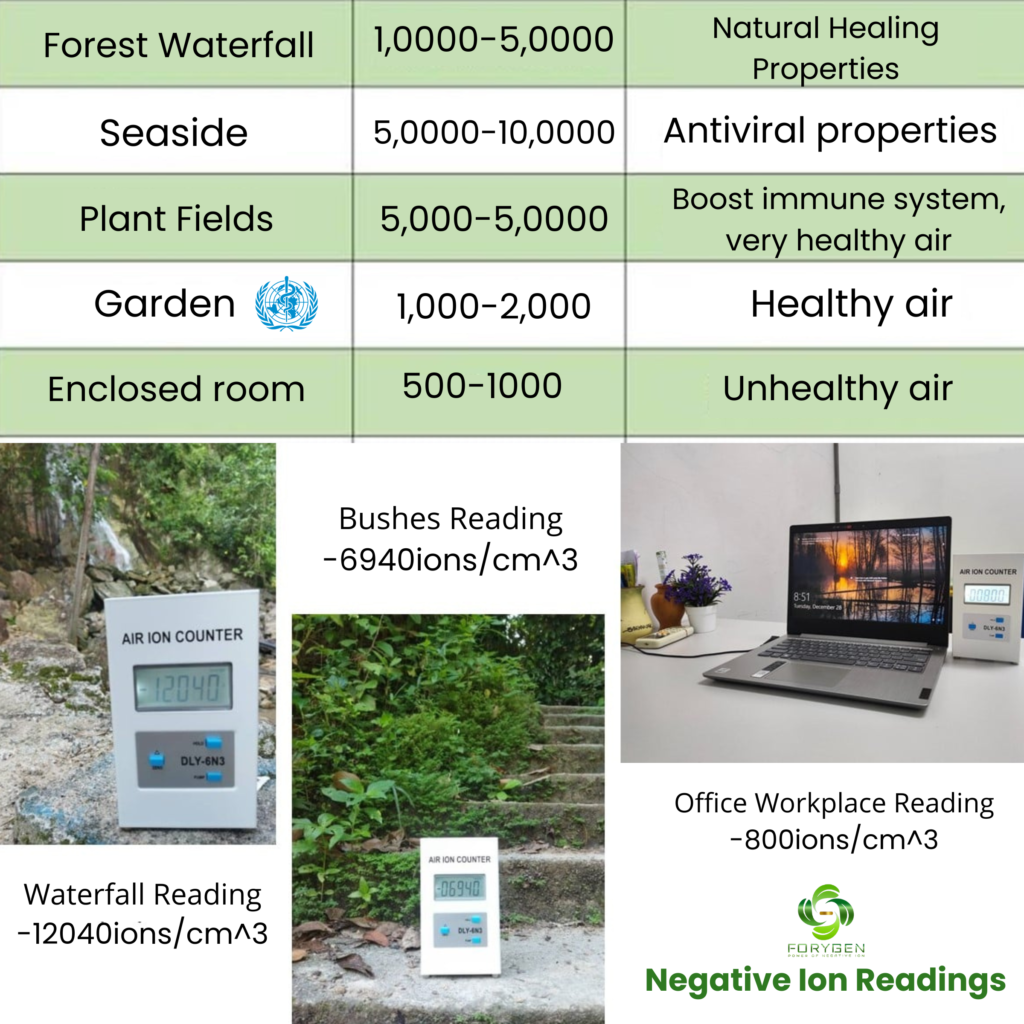
According to the current social environment, WHO (World Health Organisation) gave a standard reference bottom line of a healthy concentration level of negative ions is 1500ions/cm^3
Negative ions make your body feel recharged and rejuvenated. The reason you feel so refreshed when exposed to negative ions is because of the significantly higher negative ion concentrations in the breathable atmosphere.
Once they reach our bloodstream, negative ions are believed to produce biochemical reactions that increase levels of the mood chemical serotonin, helping to alleviate depression, relieve stress, and boost our daytime energy
Benefits Of Negative Ions

Negative ions are molecules floating in the air or atmosphere that have been charged with electricity.
Negative ions exist in nature in tons of places, including:
- ultraviolet (UV) rays from the sun
- discharges of electricity in the air after a thunderclap or lightning strike
- wherever water collides with itself like a waterfall or the ocean shore (creating the Lenard Effect )
- produced as part of the normal growth process for many plants
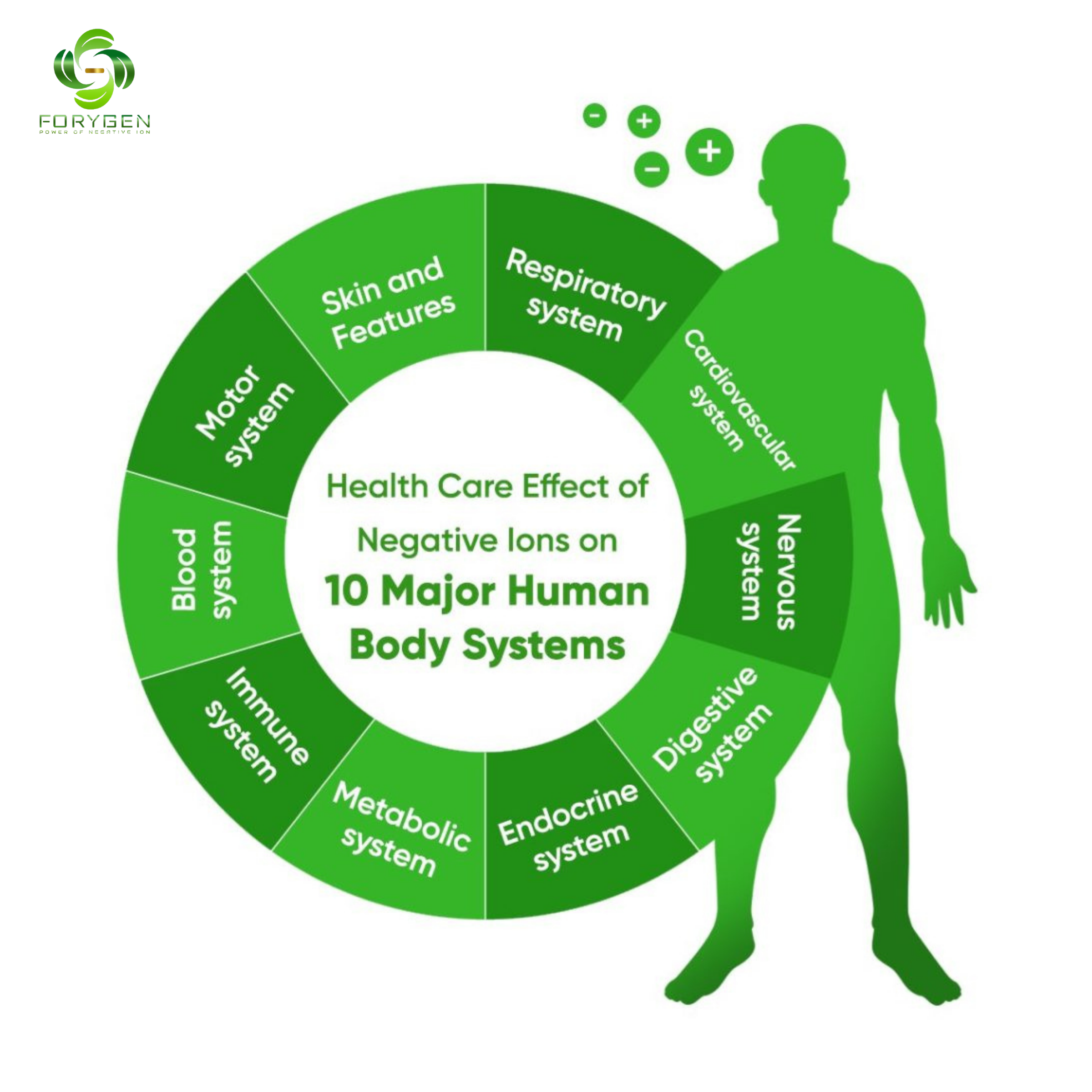
Many researchers of “negative ionization” have posited that being exposed to negative ions can have positive effects. Part of this is due to the chemical reactions that ions have with your bodily tissues and DNA.
Research supports exposure to negative ions:
- reducing symptoms of depression for some people
- having an activating influence on some body systems and cognitive performance
- promoting antimicrobial activity
- help regulate sleep patterns and mood
- reduce stress
- boost immune system function
- increase metabolism of carbs and fats
- kill or inhibit the growth of harmful bacteria, viruses, and mold species, such as E. coli, Staphylococcus aureus, and the bacterium that causes tuberculosis
Real Life Case Study : Power of Negative Ions - Restorative Medicine of Nature
The documentary team and camera crew, visited Horiguchi hospital in Japan that studies and researches on negative ions. Two months ago, Dr. Noburu Horiguchi planted cells of a colorectal cancer into 2 groups of rats and had only one group of rats exposed to negative ions for 15 minutes 4 times a day. Now in 2 months, the health conditions of the two groups of rats are noticeably different. The cancer cells in the rats that have been constantly exposed to negative ions clearly appear to remain the same while those in the other rats that have not been exposed to negative ions have grown to more than 3 centimeters.
Dr. Horiguchi: “Oxidation makes iron and metal rust. Likewise, the human body gets sick when it gets oxidized. As iron and metal don’t get rusty if they are constantly exposed to negative ions, the human body can also get healthy and live longer.”